
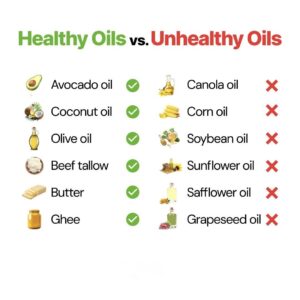
Cooking oils play a major role in our daily diet. They affect heart health, cholesterol levels, inflammation, and even weight management. While some oils provide essential nutrients and healthy fats, others are highly processed and may contribute to health problems when consumed frequently.
Understanding the difference between healthy and unhealthy oils can help you make better choices in the kitchen and improve your long-term health.
What Makes an Oil Healthy or Unhealthy?
The health impact of cooking oils depends mainly on three factors:
Type of fat: Oils rich in monounsaturated and natural saturated fats are generally more stable and healthier.
Processing method: Cold-pressed and minimally processed oils keep more nutrients.
Smoke point: Oils with higher smoke points are better for cooking because they break down less easily when heated.
Highly refined vegetable oils often undergo chemical processing and may contain unstable fats that oxidize when heated.
Healthy Oils You Should Include in Your Diet
1. Avocado Oil
Avocado oil is one of the healthiest cooking oils available.
Benefits:
Rich in heart-healthy monounsaturated fats
Supports healthy cholesterol levels
High smoke point, ideal for frying and roasting
Contains vitamin E and antioxidants
This oil is excellent for grilling, sautéing, and salad dressings.
2. Coconut Oil
Coconut oil contains medium-chain triglycerides (MCTs), which are fats that the body can quickly convert into energy.
Benefits:
May support metabolism
Antibacterial and antimicrobial properties
Stable at high temperatures
It works well in baking, frying, and many tropical recipes.
3. Olive Oil
Extra virgin olive oil is a key component of the Mediterranean diet.
Benefits:
Rich in antioxidants and polyphenols
Supports heart health
Helps reduce inflammation
Linked to lower risk of chronic diseases
Use it mainly for salads, low-heat cooking, or drizzling over food.
4. Beef Tallow
Beef tallow is a traditional animal fat that has recently regained popularity.
Benefits:
Very stable for high-heat cooking
Contains fat-soluble vitamins
Adds rich flavor to foods
It is commonly used for frying and roasting.
5. Butter
Butter has been part of traditional diets for centuries.
Benefits:
Contains vitamins A, D, E, and K
Rich flavor for cooking and baking
Less processed than many vegetable oils
Moderation is key due to its saturated fat content.
6. Ghee
Ghee is clarified butter commonly used in South Asian cooking.
Benefits:
Lactose-free for many people
Very high smoke point
Contains beneficial fatty acids
It works great for frying, sautéing, and traditional dishes.
Oils That Are Often Considered Less Healthy
1. Canola Oil
Although widely used, canola oil is highly refined in many cases.
Concerns:
Often heavily processed
May oxidize when heated
Usually produced from genetically modified crops
2. Corn Oil
Corn oil is rich in omega-6 fatty acids.
Concerns:
Excess omega-6 may promote inflammation
Highly refined and processed
Common in processed foods
3. Soybean Oil
Soybean oil is one of the most used oils in processed foods.
Concerns:
High omega-6 content
Often genetically modified
Easily oxidized during cooking
4. Sunflower Oil
Some varieties are healthier than others, but many commercial versions contain high levels of polyunsaturated fats.
Concerns:
Can become unstable when heated
High omega-6 levels
5. Safflower Oil
Like sunflower oil, safflower oil contains large amounts of polyunsaturated fats.
Concerns:
Prone to oxidation
Often heavily refined
6. Grapeseed Oil
Grapeseed oil is popular for cooking but comes with some drawbacks.
Concerns:
Very high in omega-6 fatty acids
Often extracted using chemical solvents
Tips for Choosing the Best Cooking Oil
To maintain a healthy diet, consider these tips:
✔ Choose cold-pressed or extra virgin oils whenever possible
✔ Use oils with high smoke points for frying
✔ Limit heavily processed vegetable oils
✔ Balance your intake of omega-3 and omega-6 fats
Final Thoughts
Not all cooking oils are created equal. Natural oils like avocado oil, olive oil, coconut oil, and ghee can be excellent additions to a balanced diet when used properly. On the other hand, many refined vegetable oils may contribute to inflammation and other health issues if consumed excessively.
Making smarter choices about cooking oils can improve heart health, support metabolism, and help maintain overall wellness.