
Understanding the Different Types of Lies: Why People Lie and What It Means
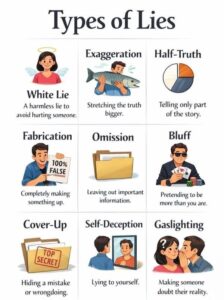
Lying is a common part of human behavior. People may lie for many reasons—sometimes to protect someone’s feelings, sometimes to avoid trouble, and sometimes to manipulate others. While all lies involve hiding or distorting the truth, not all lies are the same. Understanding the different types of lies can help us recognize them in daily life and better understand human communication and psychology.
Below are several common types of lies and what they mean.
1. White Lies
A white lie is often considered the most harmless type of lie. It is usually told to avoid hurting someone’s feelings or to maintain social harmony.
For example, if a friend asks whether you like their new outfit and you say “Yes, it looks great” even if you are unsure, that may be a white lie. The intention is not to deceive for personal gain but to protect someone’s emotions.
Although generally seen as harmless, frequent white lies can sometimes reduce honesty in relationships if used too often.
2. Exaggeration
Exaggeration occurs when someone stretches the truth to make a story more interesting, dramatic, or impressive.
For example, a person might say, “I waited forever for the bus,” when the actual wait was only ten minutes. Another example is claiming a fish caught while fishing was “huge” when it was actually average-sized.
Exaggeration is common in storytelling and everyday conversation, but it still involves distorting reality for effect.
3. Half-Truth
A half-truth happens when someone tells part of the truth but deliberately leaves out important details.
For instance, someone may say, “I finished the project,” without mentioning that it was completed incorrectly or late. Technically, the statement may contain truth, but it misleads the listener because key information is missing.
Half-truths can be particularly deceptive because they sound honest while still hiding reality.
4. Fabrication
Fabrication is when someone completely invents a story or information that has no basis in truth.
This type of lie involves creating false facts, events, or explanations. For example, someone might claim they attended a prestigious event or achieved something that never actually happened.
Fabrication is often used to impress others, avoid blame, or gain an advantage.
5. Omission
A lie by omission happens when someone intentionally leaves out important information that would change how others understand a situation.
Unlike fabrication, omission does not require making up facts. Instead, it relies on hiding key details.
For example, if someone tells their partner they are going out with friends but fails to mention that an ex-partner will also be there, they are technically telling the truth while still being misleading.
6. Bluff
A bluff involves pretending to have more knowledge, ability, or power than one actually has.
This type of lie is common in situations involving competition, negotiation, or strategy, such as poker games, business deals, or debates.
Bluffing aims to influence another person’s decision by making them believe something that is not true.
7. Cover-Up
A cover-up occurs when someone hides a mistake, wrongdoing, or failure to avoid consequences.
Instead of admitting the truth, the person may deny involvement, hide evidence, or shift blame to others. Cover-ups often create more lies to support the original lie, which can make the situation worse over time.
Many major scandals in politics, business, and public life have involved attempts to cover up mistakes rather than admit them.
8. Self-Deception
Self-deception is a unique type of lie because it involves lying to oneself rather than to others.
People may convince themselves that something is true even when evidence suggests otherwise. This can happen when facing uncomfortable truths, personal failures, or difficult emotions.
For example, someone might believe they are not affected by stress or unhealthy habits, even when clear signs show otherwise. Self-deception can act as a psychological defense mechanism.
9. Gaslighting
Gaslighting is one of the most harmful forms of deception. It involves manipulating someone into questioning their own memory, perception, or reality.
In gaslighting situations, a person may deny things they previously said or did, insist events never happened, or accuse the other person of being overly sensitive or confused.
Over time, this behavior can cause the victim to lose confidence in their own judgment and feel emotionally dependent on the manipulator.
Why Understanding Lies Matters
Recognizing the different types of lies helps people become more aware of how communication works. It also helps individuals:
-
Build healthier relationships based on honesty
-
Recognize manipulation or harmful behavior
-
Improve personal integrity and self-awareness
While small social lies may sometimes seem harmless, honesty remains the foundation of trust in relationships, workplaces, and society.
Final Thoughts
Lies come in many forms—from harmless white lies to damaging manipulation like gaslighting. Each type reflects different motives, such as protecting feelings, avoiding consequences, gaining advantage, or controlling others.
By understanding these types of lies, we can become more mindful communicators and build stronger, more transparent relationships based on truth, trust, and accountability.