
Parasites in the Colon: Myths, Facts, and Natural Support for a Healthy Digestive System
Concerns about parasites living in the colon have become common online, especially in posts promoting “natural detoxes” or extreme cleansing routines. While parasites do exist, the reality is more nuanced than many viral claims suggest. This article explains what intestinal parasites are, how they’re really treated, and how certain foods and herbs may support digestive wellness in a safe and responsible way.
1. Do Parasites Really Live in the Colon?
Yes—parasites can infect the intestines, including the colon. Common types include:
-
Pinworms
-
Hookworms
-
Tapeworms
-
Giardia (a protozoa infection)
However, in many countries, these infections are less common and are usually caused by contaminated water, food, or inadequate hygiene—not by “imbalanced pH” or eating sugar.
2. The Only Proven Way to Remove Parasites: Medication
It’s important to be clear:
The only scientifically proven way to remove intestinal parasites is through anti-parasitic medication prescribed by a doctor.
Medications such as albendazole, mebendazole, praziquantel, or metronidazole kill parasites effectively in just one or a few doses.
Herbal remedies may support your body, but they should not replace medical treatment if a parasite is actually present.
3. Can Foods and Herbs Support Gut Health? Yes—But Safely
Some natural ingredients traditionally used for digestive support may help create an environment that is less friendly to parasites. They are not cures, but they can support overall gut wellness.
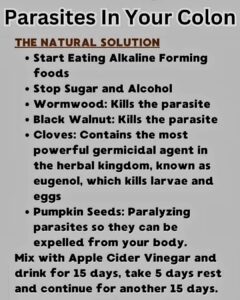
Here is an evidence-informed look at the ingredients mentioned in the image:
Alkaline-Forming Foods
Fruits, vegetables, nuts, and seeds support gut health due to fiber and antioxidants. They do not kill parasites but can improve digestion and immunity.
Reducing Sugar and Alcohol
Lowering sugar can support a healthier gut microbiome. Alcohol, in excess, weakens the immune system.
Wormwood
Traditionally used in herbal medicine. Some studies suggest it may have anti-parasitic properties, but not strong enough to replace medication.
Black Walnut
Used historically for digestive issues. Research is limited and inconsistent.
Cloves
Cloves contain eugenol, a compound with antimicrobial effects. They may help inhibit certain organisms in laboratory studies.
Pumpkin Seeds
Pumpkin seeds contain cucurbitacin, which may help slow or paralyze some worms in animals. They may support the body but are not a guaranteed treatment.
4. The Problem With Home “Parasite Detoxes”
Many online cleanses recommend:
-
Extreme fasting
-
Large amounts of vinegar
-
Harsh herbal combinations
-
Long detox cycles
These can cause:
-
dehydration
-
stomach ulcers
-
electrolyte imbalance
-
intestinal irritation
-
delayed proper medical treatment
There is no evidence that long apple-cider-vinegar detoxes remove parasites.
5. How to Know If You Truly Have a Parasite
Common symptoms include:
-
Persistent diarrhea
-
Unexplained weight loss
-
Anal itching (especially at night)
-
Abdominal cramping
-
Nausea
-
Seeing worms in stool
If you suspect an infection, the safest step is:
Get a stool test from a doctor.
It’s quick, inexpensive, and confirms whether treatment is needed.
6. Safe Ways to Support a Healthy Colon Naturally
You can support digestion and immunity with:
-
High-fiber foods (greens, berries, legumes, whole grains)
-
Probiotics (yogurt, kefir, kimchi)
-
Hydration
-
Garlic, ginger, and herbs
-
Pumpkin seeds and cloves (as part of a balanced diet)
These support a healthy gut but do not replace medical treatment for infections.
Conclusion
Parasites in the colon are real, but they require proper diagnosis and proven treatment. Natural foods and herbs can help support your digestive system, but they cannot cure a parasite infection on their own.
By combining accurate medical care with healthy natural habits, you can protect your gut, strengthen your immunity, and maintain long-term digestive wellness.