
The Surprising History of Listerine: From Antiseptic to Mouthwash
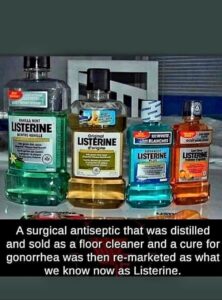
Listerine is one of the most recognizable mouthwash brands in the world—but its history is far more unusual than most people realize. Before it became a household oral hygiene product, Listerine had a variety of uses, some of which sound surprising today. The viral claim that it was once used as a surgical antiseptic, floor cleaner, and even a treatment for gonorrhea contains a mix of truth and misunderstanding. Here’s the real story.
Where Listerine Began: A Surgical Antiseptic
Listerine was created in 1879 by Dr. Joseph Lawrence and named after Joseph Lister, a pioneer of antiseptic surgery. It was first marketed as a surgical antiseptic, intended to reduce bacteria and improve safety during medical procedures.
This part of the claim is true—Listerine’s earliest role was in the medical field, not oral care.
Listerine as a Multi-Purpose Cleaner
By the late 1800s, Listerine’s strong antibacterial properties made it appealing for various household and industrial uses. It was promoted as:
-
A floor cleaner
-
A surface disinfectant
-
A household germ killer
This part is also true—Listerine was not originally designed for the mouth.
Was Listerine Sold as a Cure for Gonorrhea?
This claim is partly true but misleading.
In the late 1800s and early 1900s, before modern antibiotics existed, Listerine was advertised as a general antiseptic and suggested for washing and disinfecting affected areas. It was not an approved or effective “cure” for gonorrhea, but rather marketed as a disinfecting solution, which companies at that time commonly exaggerated in their claims.
Today, we know that gonorrhea requires proper medical antibiotic treatment.
When Listerine Became Mouthwash
Listerine entered the oral care market in the early 1900s, promoted as a solution for “chronic halitosis”—a term the company played a part in popularizing. This marketing shift led to explosive growth, and by the 1920s, Listerine had become a leading mouthwash brand.
Over time, Listerine expanded into:
-
Antiseptic mouthwash
-
Fluoride mouthwash
-
Whitening solutions
-
Specialty oral care formulas
Why Listerine’s History Seems So Strange Today
Many products from the 19th and early 20th centuries had multiple uses before consumer regulations and modern medical standards existed. Listerine’s transformation from surgical antiseptic to household cleaner to mouthwash reflects how marketing and scientific understanding evolved over time.
The Bottom Line
-
✔ True: Listerine began as a surgical antiseptic.
-
✔ True: It was marketed for cleaning floors and household surfaces.
-
✔ Partly true: It was advertised as a disinfectant for conditions including gonorrhea—but not a proven cure.
-
✔ True: Its rebranding as a mouthwash made it globally famous.
Listerine’s history shows how a single product can shift dramatically in purpose across different eras—eventually becoming the familiar oral care staple we know today.