
In recent years, natural remedies have become increasingly popular as people search for healthier and more holistic ways to support their bodies. Images and posts online often suggest replacing common medicines like aspirin, paracetamol, or antibiotics with natural options such as cloves, garlic, ginger, and hibiscus.
But can nature truly replace modern medicine? In this article, we explore the real benefits of natural remedies, what science says, and when they can support healt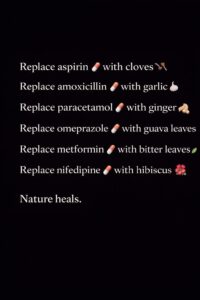
The Growing Interest in Natural Healing
For centuries, plants and herbs have been used in traditional medicine across cultures. Many natural ingredients contain powerful compounds that can support the body, reduce discomfort, and promote overall wellness.
However, it’s important to understand that natural remedies and medical treatments serve different roles. Some herbs may help support health, but they are not always direct replacements for prescribed medications.
Cloves and Pain Relief Support
Cloves have been traditionally used to help soothe minor pain, especially tooth discomfort. They contain a natural compound called eugenol, which has mild numbing and anti-inflammatory properties.
While cloves may help with temporary relief, they are not a full replacement for medical pain relievers when dealing with serious pain or medical conditions.
Garlic and Immune System Support
Garlic is well known for its natural antibacterial and immune-supporting properties. It has been used in traditional remedies to help the body fight infections and maintain general health.
However, garlic cannot replace prescribed antibiotics when treating confirmed bacterial infections. Medical treatment is often necessary to fully recover.
Ginger and Inflammation Relief
Ginger is widely used to help with nausea, sore throat, and mild inflammation. Many people drink ginger tea during cold and flu season to feel more comfortable and support digestion.
It can be a helpful natural addition to a healthy lifestyle, but it should not replace medications used for fever or serious illness.
Guava Leaves and Digestive Health
Guava leaves are used in some traditional practices to support digestion and soothe stomach discomfort. They contain plant compounds that may help calm the digestive system.
Even so, conditions like severe acid reflux or stomach ulcers should be evaluated by a healthcare professional.
Bitter Leaves and Blood Sugar Balance
Certain bitter leafy plants are traditionally used to support healthy blood sugar levels. They are often included in natural diets aimed at improving overall health.
Still, conditions like diabetes require medical monitoring and proper treatment. Natural foods can support a balanced lifestyle but should not replace prescribed care.
Hibiscus and Heart Health
Hibiscus tea is popular for supporting heart health and helping maintain healthy blood pressure levels. It is rich in antioxidants and can be part of a heart-friendly diet.
But it should be viewed as a supportive drink rather than a direct substitute for heart medications.
Nature Heals — But Balance Is Important
Natural remedies can play an important role in supporting wellness. Many herbs, fruits, and plants contain nutrients that help the body stay strong and resilient.
At the same time, modern medicine is essential for treating serious infections, chronic illnesses, and emergencies. The best approach is often a balanced one: combining healthy nutrition, natural support, and proper medical care when needed.
Safe Ways to Use Natural Remedies
You can include natural ingredients in your daily routine by:
Drinking herbal teas like ginger or hibiscus
Adding garlic to meals
Using cloves in small amounts for flavor and comfort
Eating a balanced diet rich in fruits and vegetables
These habits support long-term health naturally and safely.
Final Thoughts
Nature offers many powerful ingredients that support the body and promote wellness. Cloves, garlic, ginger, and herbal plants have been valued for generations and can be part of a healthy lifestyle.
However, they should be seen as supportive tools — not direct replacements for important medical treatments. A smart approach is to combine natural nutrition with responsible healthcare to achieve the best results for your overall well-being.