
Essential Vitamins & Nutrients: A Guide to What They Do and Where to Find Them
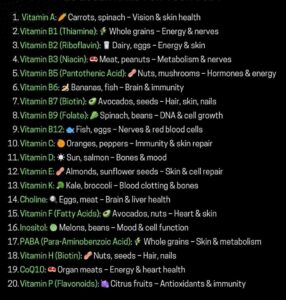
Vitamins and nutrients play a crucial role in keeping the body functioning at its best. Each vitamin supports specific organs, systems, and biological processes. Understanding what they do—and which foods provide them—can help you make healthier choices every day. Below is a breakdown of 20 important nutrients, their benefits, and common food sources.
1. Vitamin A
Sources: Carrots, spinach
Benefits: Supports vision, skin health, and immune function.
2. Vitamin B1 (Thiamine)
Sources: Whole grains
Benefits: Essential for energy production and healthy nerve function.
3. Vitamin B2 (Riboflavin)
Sources: Dairy products, eggs
Benefits: Helps convert food into energy and supports skin health.
4. Vitamin B3 (Niacin)
Sources: Meat, peanuts
Benefits: Aids metabolism and supports the nervous system.
5. Vitamin B5 (Pantothenic Acid)
Sources: Nuts, mushrooms
Benefits: Helps produce hormones and boosts energy.
6. Vitamin B6
Sources: Bananas, fish
Benefits: Important for brain function and immunity.
7. Vitamin B7 (Biotin)
Sources: Avocados, seeds
Benefits: Promotes healthy hair, skin, and nails.
8. Vitamin B9 (Folate)
Sources: Spinach, beans
Benefits: Needed for DNA formation and cell growth.
9. Vitamin B12
Sources: Fish, eggs
Benefits: Supports nerve health and red blood cell formation.
10. Vitamin C
Sources: Oranges, peppers
Benefits: Strengthens immunity and aids skin repair.
11. Vitamin D
Sources: Sunlight, salmon
Benefits: Supports bone health and improves mood.
12. Vitamin E
Sources: Almonds, sunflower seeds
Benefits: Protects cells and supports skin repair.
13. Vitamin K
Sources: Kale, broccoli
Benefits: Essential for blood clotting and bone health.
14. Choline
Sources: Eggs, meat
Benefits: Supports brain development and liver function.
15. Vitamin F (Fatty Acids)
Sources: Avocados, nuts
Benefits: Good for heart health and skin.
16. Inositol
Sources: Melons, beans
Benefits: Supports mood regulation and cell function.
17. PABA (Para-Aminobenzoic Acid)
Sources: Whole grains
Benefits: Helps skin health and metabolism.
18. Vitamin H (Biotin)
Sources: Nuts, seeds
Benefits: Important for healthy hair and nail growth.
19. CoQ10
Sources: Organ meats
Benefits: Boosts energy and supports heart health.
20. Vitamin P (Flavonoids)
Sources: Citrus fruits
Benefits: Powerful antioxidants that boost immunity.
Final Thoughts
A balanced diet rich in fruits, vegetables, whole grains, nuts, seeds, and lean proteins can provide most of these essential nutrients naturally. Understanding what each vitamin does helps you build smarter meals and maintain long-term health.