
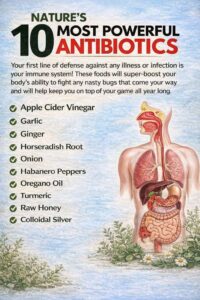
Your immune system is your body’s first and strongest line of defense against infections. While modern medicine plays a vital role in treating serious illnesses, nature also provides many foods with antibacterial, antiviral, and anti-inflammatory properties that can support immune health and overall well-being.
Below are ten natural foods often praised for their ability to help the body fight harmful microbes and stay resilient year-round.
1. Apple Cider Vinegar
Apple cider vinegar contains acetic acid, which may help inhibit the growth of certain bacteria. It also supports digestion and gut health, which are closely linked to immune function.
How it helps:
Creates an unfavorable environment for harmful microbes
Supports healthy gut bacteria
May help regulate blood sugar levels
2. Garlic
Garlic is one of the most researched natural antibacterial foods. Its active compound allicin has been shown to fight bacteria, viruses, and fungi.
Benefits:
Supports immune cell activity
May reduce the severity of colds and flu
Helps protect the heart and blood vessels
3. Ginger
Ginger has powerful anti-inflammatory and antimicrobial properties and has been used for centuries in traditional medicine.
Benefits:
Helps fight respiratory and digestive infections
Reduces inflammation
Supports digestion and relieves nausea
4. Horseradish Root
Horseradish contains compounds that can help fight bacteria in the sinuses and respiratory tract.
Benefits:
Supports sinus and lung health
Helps clear mucus
Traditionally used for colds and congestion
5. Onion
Onions are rich in quercetin, a strong antioxidant with antibacterial and antiviral effects.
Benefits:
Supports immune balance
Helps reduce inflammation
Promotes heart and gut health
6. Habanero Peppers
These spicy peppers are rich in capsaicin, which has antimicrobial and immune-stimulating properties.
Benefits:
Helps fight harmful bacteria
Boosts circulation
May support metabolism
⚠️ Best consumed in moderation, especially for sensitive stomachs.
7. Oregano Oil
Oregano oil contains carvacrol and thymol, compounds known for strong antimicrobial effects.
Benefits:
Supports immune defense
May help fight certain bacteria and fungi
Often used short-term, not continuously
⚠️ Highly concentrated—should be used carefully and diluted.
8. Turmeric
Turmeric’s active compound curcumin is a powerful anti-inflammatory and antioxidant.
Benefits:
Supports immune regulation
Helps reduce chronic inflammation
Supports joint and digestive health
Best absorbed when combined with black pepper.
9. Raw Honey
Raw honey has natural antibacterial properties and has been used traditionally for wound healing and sore throats.
Benefits:
Helps soothe coughs and throat irritation
Supports gut health
Contains antioxidants
⚠️ Not suitable for infants under one year.
10. Colloidal Silver (Important Note)
While often promoted online, colloidal silver is controversial and not recommended for regular use. Excessive intake can cause serious health issues, including permanent skin discoloration.
Important:
Not an essential nutrient
Not a substitute for medical treatment
Should only be discussed with a healthcare professional
Final Thoughts
Natural antibacterial foods can support your immune system, improve overall health, and help your body stay strong. However:
✔ They support immunity
❌ They do not replace antibiotics when prescribed
✔ Balance, variety, and moderation are key
A healthy lifestyle—good nutrition, sleep, hydration, and medical care when needed—is always the best defense.