
Understanding Peripheral Artery Disease (PAD): Causes, Symptoms, and How to Improve Blood Flow to the Legs
Peripheral Artery Disease (PAD) is a common circulatory condition in which narrowed arteries reduce blood flow to the limbs—most often the legs. When arteries become clogged or stiff due to plaque buildup, the muscles and tissues in the legs do not receive enough oxygen-rich blood. Over time, this can lead to pain, numbness, and even serious complications if left untreated.
This article explains what causes PAD, the difference between blocked and healthy arteries, and lifestyle habits that support better circulation.
What Happens in PAD?
In Peripheral Artery Disease, fatty deposits called atherosclerotic plaque build up inside the arteries that supply blood to the legs. As the artery walls narrow, the blood has less space to flow through, resulting in:
-
Poor circulation to the muscles and skin
-
Reduced oxygen delivery
-
Pain, especially during walking (claudication)
-
Numbness, tingling, or weakness
-
Slow wound healing or ulcers in severe cases
PAD often develops gradually, and early symptoms may be subtle. Recognizing the causes can help prevent progression.
Causes and Risk Factors for Blocked Blood Flow
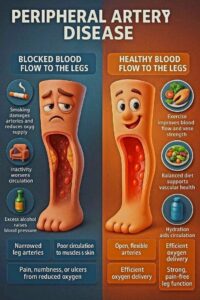
The infographic highlights several key contributors to blocked or narrowed arteries:
1. Smoking
Smoking is the biggest preventable cause of PAD. Chemicals in cigarette smoke damage blood vessels, reduce oxygen flow, and accelerate plaque buildup. Smokers are up to four times more likely to develop PAD than non-smokers.
2. Inactivity
A sedentary lifestyle weakens circulation and reduces the body’s ability to deliver oxygen to muscles. Regular movement keeps arteries flexible and strong, which is vital for leg health.
3. Excessive Alcohol
Drinking too much alcohol raises blood pressure and increases inflammation, both of which contribute to artery stiffness and plaque formation.
How Blocked Arteries Affect the Legs
When arteries are narrowed, several issues develop:
• Narrowed leg arteries
Blood struggles to flow through restricted pathways.
• Poor circulation to muscles and skin
This leads to pain, fatigue, and slower healing.
• Pain, numbness, or ulcers from reduced oxygen
The tissues don’t receive the oxygen they need, resulting in discomfort or, in severe cases, open sores.
These symptoms usually get worse over time without proper intervention.
Healthy Blood Flow: What Supports Vascular Health?
The right lifestyle choices can significantly improve blood flow, strengthen arteries, and reduce PAD symptoms. The infographic points to three essential habits:
1. Regular Exercise
Exercise is one of the best ways to improve circulation. It:
-
Strengthens blood vessels
-
Encourages new blood flow pathways
-
Improves oxygen delivery
-
Reduces claudication (leg pain during walking)
Even simple walking programs can dramatically help people with PAD.
2. Balanced, Heart-Healthy Diet
Nutrient-rich foods—such as leafy greens, whole grains, fish, nuts, and colorful vegetables—support vascular flexibility and reduce plaque buildup. A healthy diet lowers cholesterol and inflammation, both major contributors to PAD.
3. Good Hydration
Staying hydrated helps maintain blood volume and flow. Proper hydration prevents blood from becoming thick and sluggish, making circulation more efficient.
Benefits of Healthy Blood Flow
When arteries remain open and flexible, the body experiences:
• Efficient oxygen delivery
Muscles receive the oxygen they need to function normally.
• Strong, pain-free leg function
Walking becomes easier, and swelling or numbness decreases.
• Reduced risk of ulcers and complications
Healthy circulation speeds up healing and reduces tissue damage.
Final Thoughts
Peripheral Artery Disease is serious—but with early detection and lifestyle changes, it is highly manageable. Avoiding smoking, staying active, eating a balanced diet, and maintaining hydration can dramatically improve circulation and support healthy arteries.
If you experience leg pain, numbness, or slow-healing wounds, it’s important to consult a healthcare professional for evaluation. Early treatment can prevent complications and restore mobility, comfort, and quality of life.