
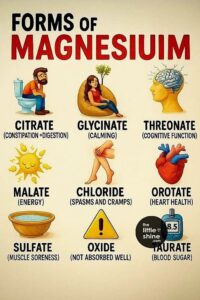
Understanding the Different Forms of Magnesium and Their Benefits
Magnesium is an essential mineral involved in hundreds of biological processes in the body—including energy production, muscle function, nerve health, and mood regulation. Because each form of magnesium is bound to a different compound, they behave differently in the body and can be used for specific purposes.
Below is a helpful breakdown of the most common forms of magnesium and what they are typically known for.
1. Magnesium Citrate – Digestion & Constipation Relief
Magnesium citrate is one of the most widely used forms, especially for digestive health. It has a gentle laxative effect, making it a popular option for easing constipation. It is also relatively well-absorbed and can support overall digestive regularity.
2. Magnesium Glycinate – Calming & Relaxation
Magnesium glycinate is a combination of magnesium and the amino acid glycine. This form is often praised for its calming properties. Many people choose glycinate to help with relaxation, stress reduction, and better sleep quality. It is also easy on the stomach.
3. Magnesium Threonate – Cognitive Support
Magnesium L-threonate stands out for its ability to cross the blood-brain barrier more effectively than other forms. Because of this, it is commonly associated with supporting memory, learning, and overall cognitive function.
4. Magnesium Malate – Energy & Muscle Support
Magnesium malate is bonded to malic acid, a key player in energy production. This form is often used for fighting fatigue and supporting muscles. It may benefit individuals who need enhanced physical stamina or who struggle with low energy.
5. Magnesium Chloride – Muscle Cramps & Spasms
Magnesium chloride is well-absorbed and commonly used to help soothe muscle cramps, spasms, and tension. It is also available in topical forms like sprays and oils, which many people find convenient for muscle relief.
6. Magnesium Orotate – Heart Health
This form combines magnesium with orotic acid. It is often discussed in the context of cardiovascular support, although orotate supplements tend to be more specialized and sometimes pricier.
7. Magnesium Sulfate – Muscle Soreness (Epsom Salt)
Magnesium sulfate is better known as Epsom salt. When used in baths, it is popular for easing muscle soreness, promoting relaxation, and soothing the body. It is typically used externally rather than as a daily supplement.
8. Magnesium Oxide – Low Absorption
Magnesium oxide contains a high percentage of elemental magnesium but is not absorbed as effectively as other forms. Because of this, its benefits may be limited, although it is sometimes used for digestive issues.
9. Magnesium Taurate – Blood Sugar & Heart Support
This form combines magnesium with the amino acid taurine. It is often associated with metabolic support, including blood sugar balance and potential cardiovascular benefits. The calming effects of taurine may also contribute to a sense of balance and relaxation.
Final Thoughts
Choosing the right form of magnesium depends on your specific needs—whether it’s digestion, sleep, cognitive support, muscle health, or energy. While magnesium is generally safe for most people, it’s always wise to consult a healthcare professional before starting any new supplement, especially if you have medical conditions or take medications.