
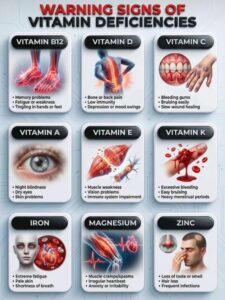
⚠️ Warning Signs of Vitamin Deficiencies
Vitamins are essential nutrients your body needs in small amounts to function properly. When your body doesn’t get enough of them, it can lead to a range of physical and mental symptoms—some subtle, others more serious.
Understanding the early warning signs can help you correct deficiencies before they turn into health problems.
🧠 Why Vitamin Deficiencies Matter
Vitamin deficiencies can affect:
- Energy levels
- Immune system strength
- Brain function
- Skin, hair, and nails
- Organ health
Long-term deficiencies can contribute to serious diseases like Anemia, Osteoporosis, and even neurological disorders.
🔍 Common Vitamin Deficiencies & Their Symptoms
1. Vitamin D Deficiency
Role: Bone health, immune support
Warning signs:
- Constant fatigue
- Bone or back pain
- Muscle weakness
- Frequent infections
- Low mood or depression
Severe deficiency may lead to Rickets in children or osteomalacia in adults.
2. Vitamin B12 Deficiency
Role: Nerve function, red blood cell production
Warning signs:
- Extreme tiredness
- Pale or yellowish skin
- Tingling in hands and feet
- Memory problems or confusion
- Mood changes (depression, irritability)
Long-term deficiency can cause Pernicious anemia.
3. Iron Deficiency (Technically a mineral, but very common)
Role: Oxygen transport in blood
Warning signs:
- Fatigue and weakness
- Shortness of breath
- Dizziness
- Cold hands and feet
- Brittle nails
Can lead to Iron-deficiency anemia.
4. Vitamin C Deficiency
Role: Immune function, skin health, wound healing
Warning signs:
- Frequent colds
- Bleeding gums
- Easy bruising
- Slow wound healing
- Dry, rough skin
Severe deficiency leads to Scurvy.
5. Vitamin A Deficiency
Role: Vision, immune system
Warning signs:
- Night blindness
- Dry eyes
- Frequent infections
- Dry skin
Severe cases can lead to Xerophthalmia.
6. Vitamin B7 (Biotin) Deficiency
Role: Hair, skin, and metabolism
Warning signs:
- Hair thinning or hair loss
- Red, scaly rash (especially on face)
- Brittle nails
- Fatigue
7. Vitamin K Deficiency
Role: Blood clotting
Warning signs:
- Easy bruising
- Excessive bleeding from cuts
- Frequent nosebleeds
8. Vitamin E Deficiency
Role: Antioxidant, nerve and immune function
Warning signs:
- Muscle weakness
- Vision problems
- Nerve pain or numbness
- Poor coordination
🚨 General Signs You Shouldn’t Ignore
Some symptoms overlap across multiple deficiencies:
- Persistent fatigue
- Brain fog or memory issues
- Weak immunity (getting sick often)
- Hair loss
- Skin problems (dryness, acne, rashes)
- Cracks at the corners of the mouth
- Swollen or sore tongue
🥗 Common Causes of Vitamin Deficiencies
- Poor diet (low in fruits, vegetables, proteins)
- Digestive disorders (like Celiac disease)
- Lack of sunlight (for Vitamin D)
- Pregnancy or increased nutritional needs
- Certain medications
- Vegan/vegetarian diets (risk of B12 deficiency)
🧪 When to Get Tested
You should consider medical testing if you experience:
- Long-lasting fatigue
- Neurological symptoms (tingling, confusion)
- Unexplained weakness
- Frequent illness
A doctor may order blood tests to confirm deficiencies.
✅ How to Prevent Vitamin Deficiencies
1. Eat a Balanced Diet
Include:
- Fruits and vegetables
- Whole grains
- Lean proteins
- Healthy fats
2. Get Sunlight
- 10–30 minutes daily for Vitamin D (depending on skin type and location)
3. Consider Supplements
- Only if needed and guided by a healthcare professional
4. Address Underlying Conditions
- Treat digestive or absorption issues
⚡ Final Thoughts
Vitamin deficiencies often start with subtle signs that are easy to ignore. Fatigue, skin issues, or mood changes might not seem serious—but they can be your body’s early warning system.
Catching these signs early and making dietary or lifestyle changes can prevent long-term health complications.