
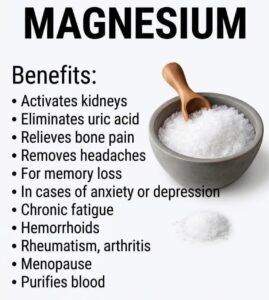
🧠In both Traditional Chinese Medicine (TCM) and modern clinical practice in China, magnesium is increasingly recognized as a vital mineral for overall health. While TCM traditionally focuses on balance and energy (Qi), modern Chinese doctors often integrate nutritional science—making magnesium a common recommendation.
So why is magnesium so important?
⚙️ What Is Magnesium?
Magnesium is an essential mineral involved in over 300 biochemical reactions in the body. It supports:
- Muscle and nerve function
- Energy production
- Heart rhythm
- Bone health
👉 Despite its importance, many people are deficient without realizing it.
💚 Reasons Chinese Doctors Recommend Magnesium
1. Supports Stress and Nervous System Balance
Modern lifestyles bring high stress levels, which disrupt the body’s balance.
- Magnesium helps calm the nervous system
- Promotes relaxation and better sleep
👉 In TCM terms, it helps restore internal balance and reduce “overactive energy.”
2. Improves Sleep Quality 😴
Sleep issues are very common.
- Magnesium regulates melatonin (sleep hormone)
- Helps relax muscles and mind
👉 Often recommended for insomnia or restless sleep.
3. Relieves Muscle Tension and Cramps
Magnesium plays a key role in muscle function.
- Prevents cramps and spasms
- Helps muscles relax after contraction
👉 Commonly suggested for athletes and older adults.
4. Supports Heart Health ❤️
Magnesium is crucial for cardiovascular function.
- Helps regulate blood pressure
- Supports normal heart rhythm
👉 Important in preventing heart-related conditions.
5. Helps with Blood Sugar Control
Magnesium influences how the body processes glucose.
- Improves insulin sensitivity
- Supports metabolic health
👉 Especially relevant for people with Type 2 Diabetes.
6. Eases Headaches and Migraines
Some doctors recommend magnesium for:
- Reducing migraine frequency
- Relaxing blood vessels
👉 A natural support option for chronic headaches.
7. Supports Bone Strength
Magnesium works alongside calcium and vitamin D.
- Helps maintain strong bones
- Supports long-term skeletal health
👉 Important for aging populations.
🥗 Natural Food Sources of Magnesium
Chinese doctors often emphasize food first before supplements.
Rich sources include:
- Leafy greens (spinach, kale)
- Nuts (almonds, cashews)
- Seeds (pumpkin, sunflower)
- Whole grains
- Legumes
👉 A balanced diet is the foundation of good health.
💊 Magnesium Supplements: When Are They Used?
Supplements may be recommended when:
- There is a confirmed deficiency
- Diet alone isn’t sufficient
- Symptoms like fatigue, cramps, or poor sleep persist
👉 Common forms include magnesium citrate and glycinate.
⚠️ Important Considerations
- Too much magnesium can cause digestive issues (like diarrhea)
- People with kidney problems should be cautious
- Always consult a healthcare professional before starting supplements
🌿 Magnesium in Traditional Chinese Medicine Perspective
While magnesium itself is a modern concept, its effects align with TCM principles:
- Calms the “Shen” (mind/spirit)
- Relaxes the body
- Supports energy flow (Qi)
👉 This makes it compatible with both traditional and modern approaches.
🌟 Final Thoughts
Magnesium is a simple yet powerful nutrient that supports many aspects of health—from sleep and stress to heart and muscle function. That’s why many doctors in China recommend it as part of a balanced lifestyle.
Whether through food or supplements, maintaining healthy magnesium levels can make a noticeable difference in how you feel every day.